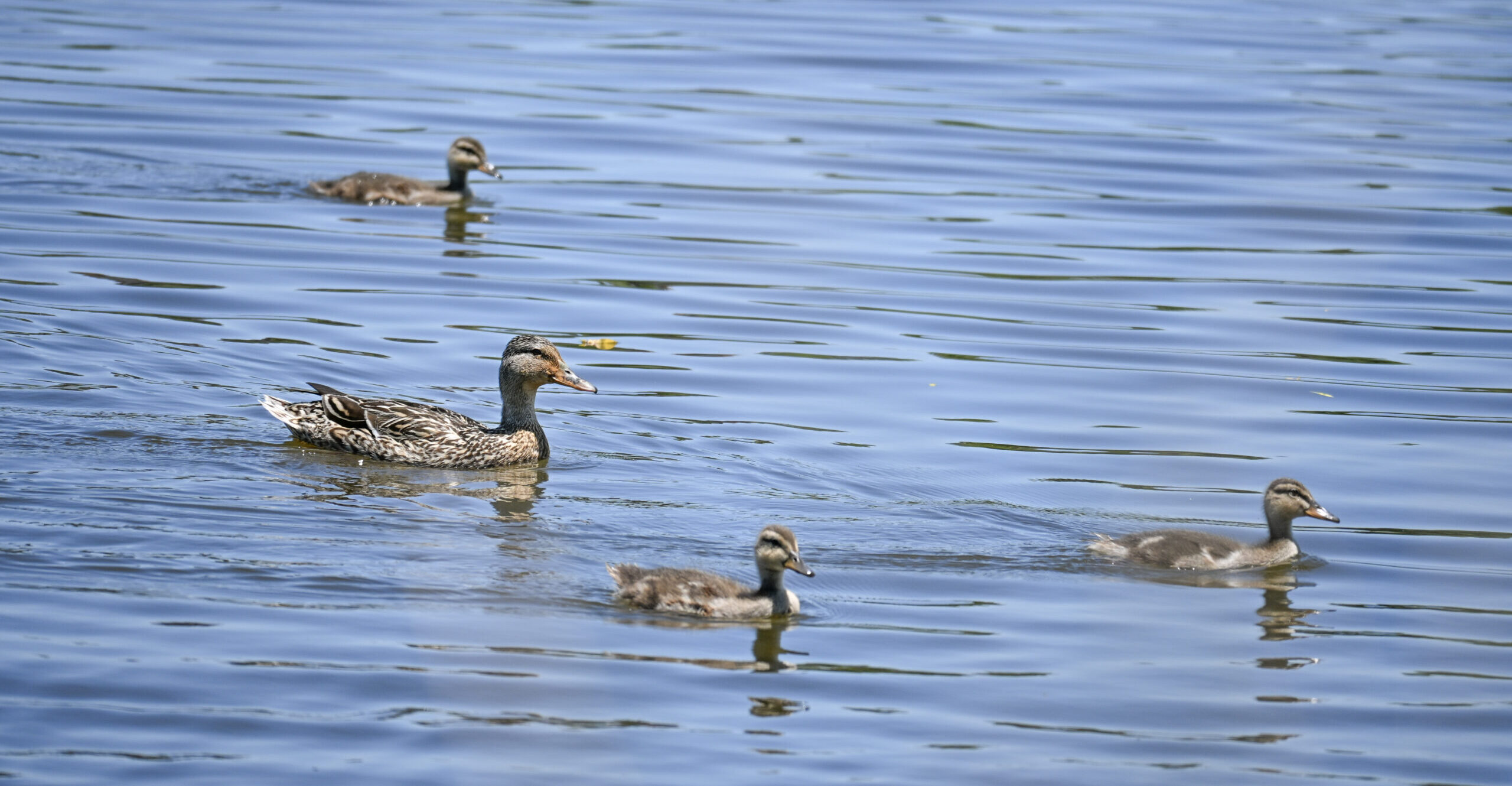
Last week, one of our smallest Conservancy residents found himself in a big predicament.
A duckling, now affectionately named Trooper, was discovered at Willow Lake with a fishing hook lodged in its neck. Concerned residents alerted our team, and we quickly sprang into action to get him the help he needed.
Thankfully, Trooper’s story has a happy ending.
Trooper in good hands.

After being carefully transported to VEG Emergency Veterinary Clinic, Veterinarians were able to safely remove the hook and examine him for any additional injuries. Trooper received plenty of attention and care from the clinic staff before being cleared for release.
The best part? About a week later, we spotted Trooper back at Willow Lake, swimming alongside his mother and siblings as if nothing had happened.
While we’re grateful for this positive outcome, Trooper’s experience highlights an important issue facing wildlife in our ponds and waterways.
 Fishing line, especially monofilament line, is not biodegradable and can remain in the environment indefinitely.
Each year, discarded fishing line accounts for roughly 10% of marine litter collected from waterways. Lost or abandoned lines can entangle birds, turtles, fish, amphibians, and other wildlife, restricting movement, preventing feeding, and causing serious injuries.
Fishing hooks pose risks as well, often resulting in wounds, blindness, or other injuries to animals that encounter them.
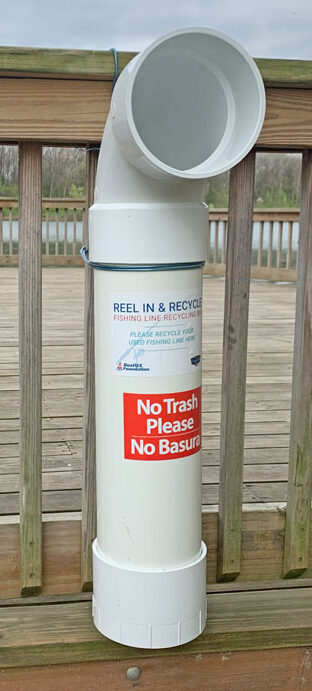 To help protect wildlife, the Conservancy has installed fishing line and tackle disposal stations like the one shown at Cedar Pond Pavilion, with additional stations being added at Willow Lake and Poplar Pond this summer. These PVC collection tubes are specifically designed for fishing line and unwanted tackle.
If you’re fishing at the Conservancy, please help us keep our waterways safe by:
-
-
-
- Using the fishing line disposal stations whenever possible
- Retrieving snagged line and hooks from vegetation when it is safe to do so
- Taking old fishing line to a recycling location or bait shop
- Cutting discarded line into smaller pieces before throwing it away if a recycling option isn’t available
- Keeping trash out of the disposal stations so they remain available for fishing line and tackle
-
-
A few extra moments of care can make a tremendous difference for the wildlife that call our ponds home. We’re incredibly happy that Trooper got a second chance. With everyone’s help, we can ensure more wildlife stories end just as happily.