
As winter loosens its grip on Virginia’s forests, a brief but beautiful display unfolds on the forest floor starting around the end of March continuing through April. Spring ephemerals—some of our earliest wildflowers—emerge, bloom, and disappear all within a matter of weeks. These plants are perfectly adapted to take advantage of a very narrow window of time where conditions are just right. They grow and flower before trees leaf out and shade the ground, allowing the spring ephemerals to soak up ample sunlight, moisture, and nutrients before other plants fully emerge.
What sets spring ephemerals apart from other blooms we see later in the season is their urgency. Unlike summer wildflowers that may bloom for months, ephemerals live fast. By late spring, their leaves wither away, and the plants retreat underground, storing energy in their root systems until the next year. Catching them at peak bloom is a true reward of early spring.
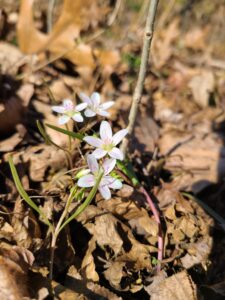
One of the most widespread ephemerals in Virginia is spring beauty (Claytonia virginica). These delicate flowers, with white to pale pink petals striped in darker veins, often blanket moist woods, floodplains, and stream banks. Look for them in rich, loamy soils where water drains well but remains available in early spring.
Trout lily (Erythronium americanum) is another forest favorite, easily recognized by its mottled leaves that resemble the patterning of a brook trout. Its stunning yellow flowers appear in deciduous forests with deep leaf litter, often on slopes or in well-drained soils.
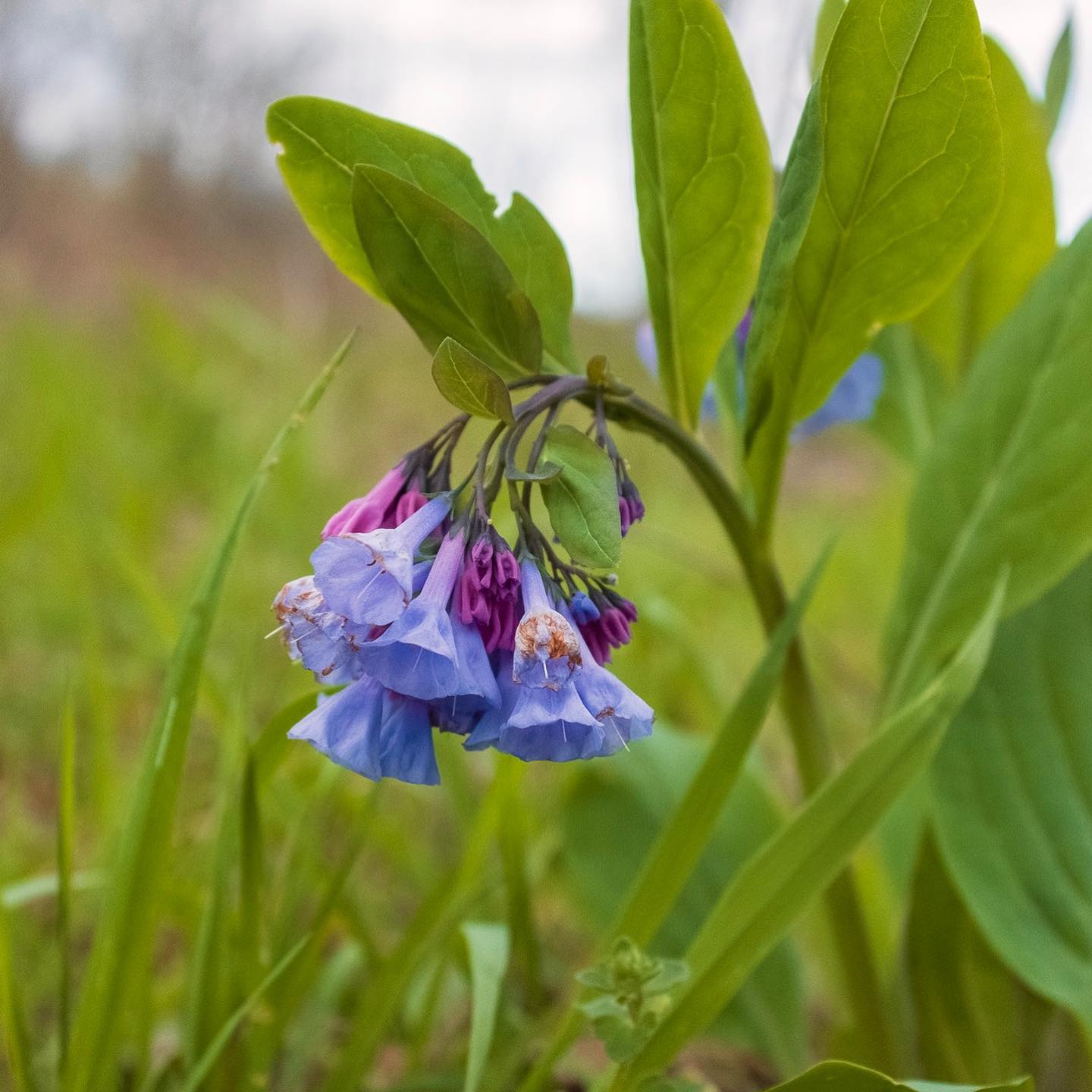 In wetter woodland areas and along creeks, Virginia bluebells (Mertensia virginica) put on one of spring’s most iconic and well known shows. Their clusters of bell-shaped flowers shift from pink buds to brilliant blue as they mature, creating a striking contrast against the still-bare forest. One of our favorite spots to view these wildflowers is along Bull Run in The Greens.
You may also spot mayapple (Podophyllum peltatum), which forms dense colonies in shady woods. While its umbrella-like leaves are easy to notice, its single white flower often hides beneath the foliage. Later in the season, that flower gives way to a small, apple-like fruit which is a delicious treat for box turtles.
Spring ephemerals are tightly linked to early-season pollinators. Native bees, including mining bees and mason bees, are among their most important visitors, along with hoverflies and small beetles. These insects emerge early and rely on ephemerals as some of the first sources of nectar and pollen after winter. If you’re exploring Virginia’s forests this spring, slow down and look at your feet for these short lived beauties.