
As temperatures soar into the 90s and beyond, most of us head indoors, take a dip in a pool, or reach for an iced drink. But what about the animals? Wildlife doesn’t have air conditioning, but they’ve evolved clever strategies to survive, and understanding those can help us protect them. Read below to learn about the different techniques our wildlife does to survive high temperatures and what you can do to support them.
Watch closely: This Great blue Heron (Ardea herodias) in the video to the right uses gular fluttering, rapid movement of the throat pouch, to help regulate body temperature during extreme heat. Great Blue Heron Gular Fluttering
Seek Shelter: Shade, Burrows, and Cover
Many mammals like foxes, groundhogs, and rabbits rest in shaded areas or underground during peak heat. Snakes and lizards seek shelter under logs, leaf litter, or shaded rocks. Birds will retreat to thick shrubs or the leafy canopies of trees.
Shift to Night: Nocturnal and Twilight Activity
You might notice the trails are quiet during the day, but come alive around dusk. Deer, raccoons, coyotes, and even some birds become more active at dawn, dusk, or overnight to avoid the midday heat.
Make Use of Water
Amphibians like frogs and toads stick close to water sources. Dragonflies, damselflies, and other insects gather around ponds and wetland areas. Birds frequently visit puddles and birdbaths to drink and cool off.
Cool Tricks: Built-in Adaptations
Birds use a technique called gular fluttering, rapidly vibrating their throat skin, to release heat. Some mammals, like foxes, spread saliva or pant to cool down. Insects often change their movement patterns or retreat into cooler microhabitats.
Climate Stress and Wildlife
Heatwaves are becoming more intense and frequent due to climate change. Wildlife doesn’t just “adapt on the fly”. Extreme heat can disrupt breeding and foraging, dry up temporary water sources like vernal pools, and increase the risk of dehydration or heat stress. Species already stressed by habitat loss are especially vulnerable.
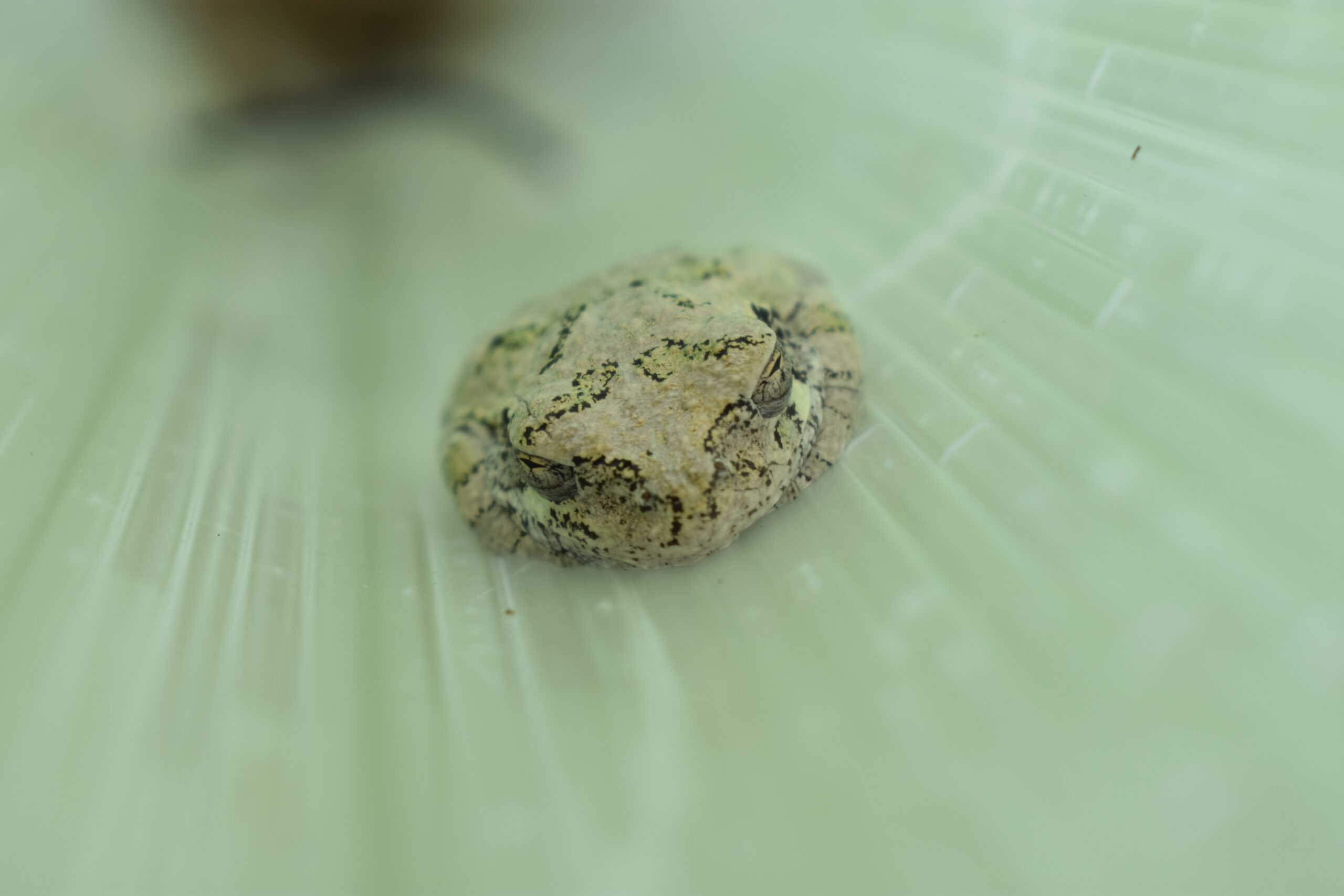
Grey Tree Frog
Grey tree frog (Hyla versicolor) nestled in a tree tube at Darkmoor Pond.
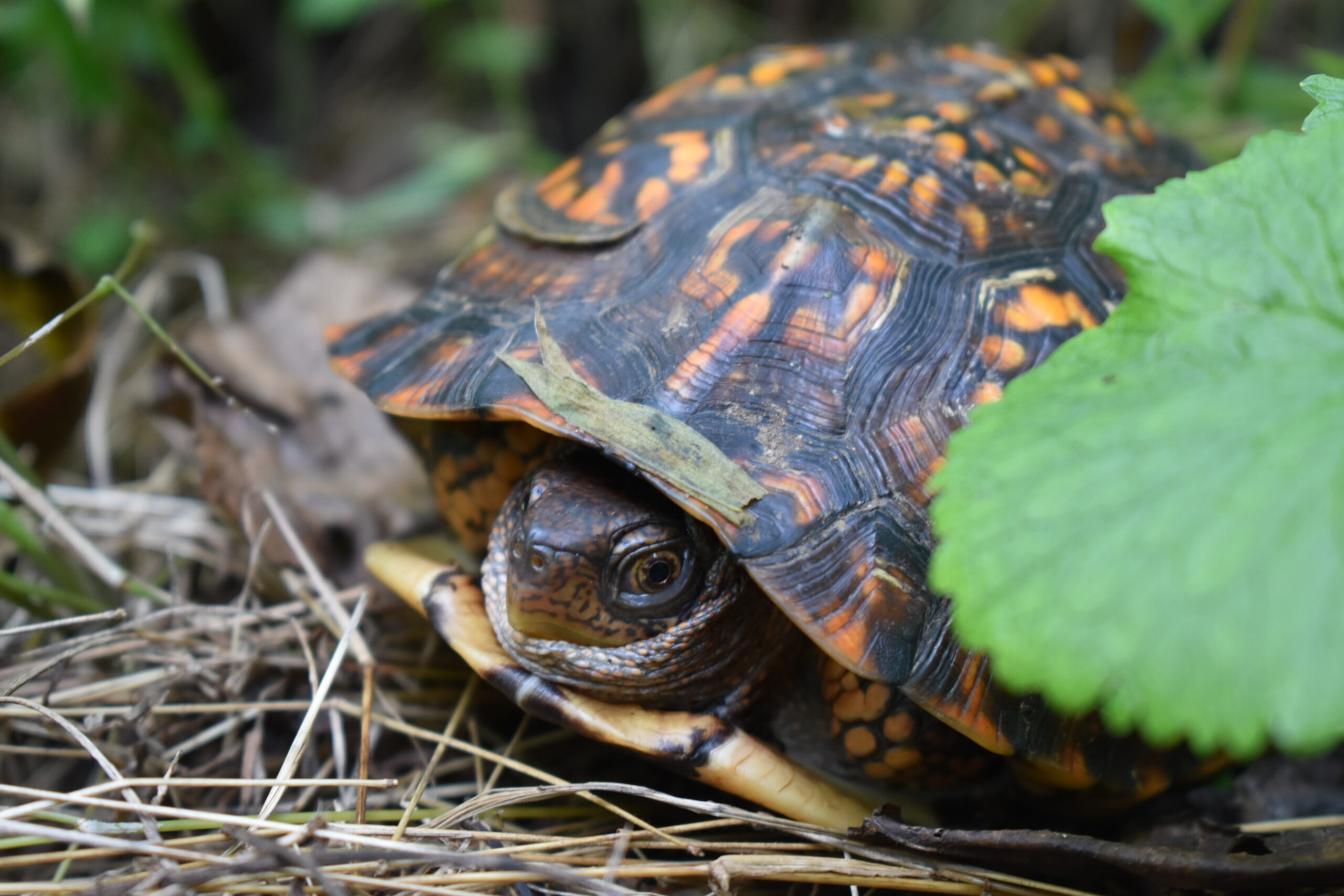
Eastern Box turtle
Eastern Box Turtle (Terrapene carolina carolina) rests in the shade of the forest floor.
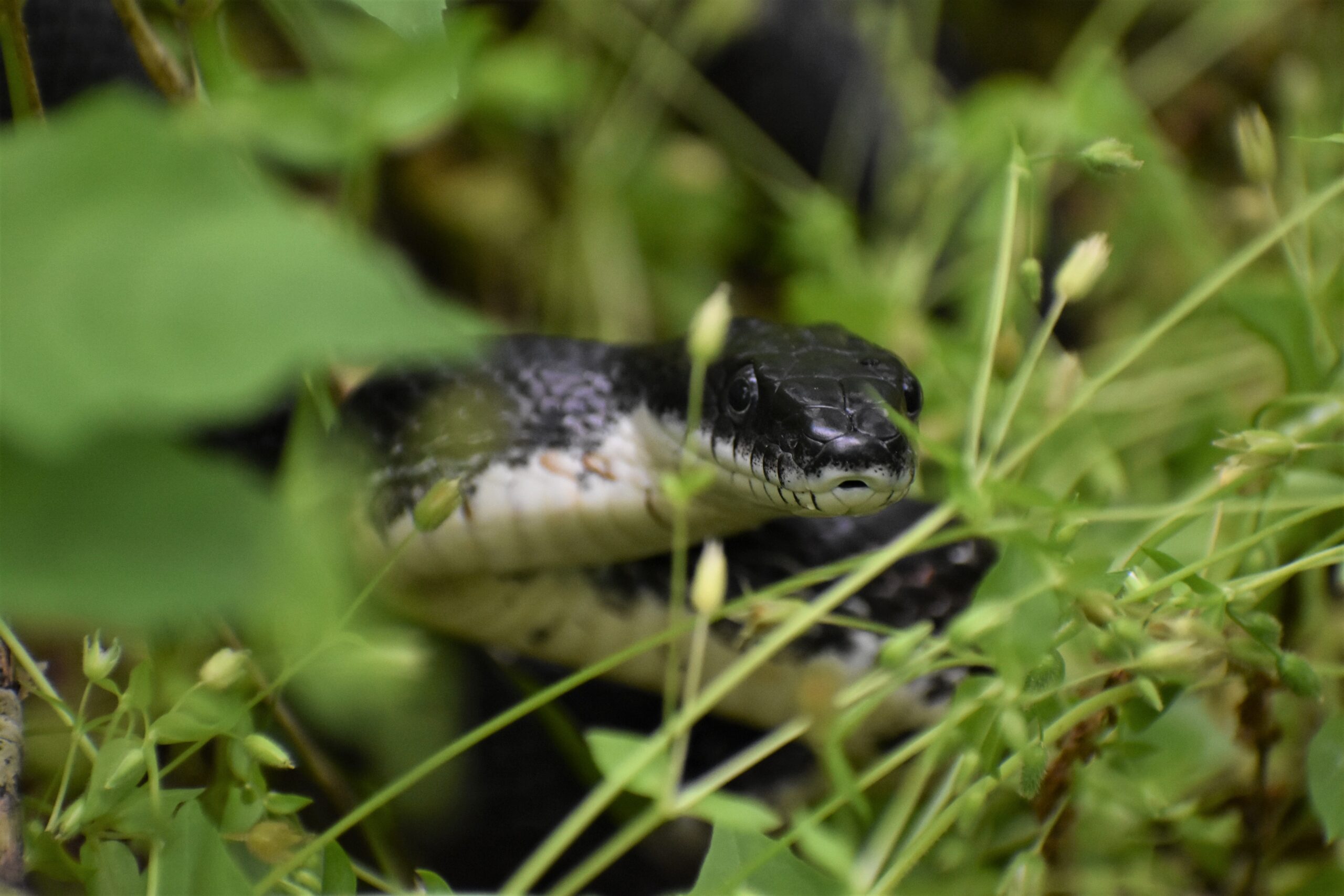
Black Rat Snake
Black Rat Snake (Pantherophis obsoletus) taking shelter in thick vegetation.

Red Fox
Red Fox (Vulpes vulpes), spotted in the Grange, pants to release heat on a hot day
How You Can Help
Some small changes around your home and neighborhood can make a big difference:
- Provide water: Birdbaths or shallow dishes with rocks give birds and pollinators a place to drink and cool off. Just be sure to regularly clean them and refresh the water to prevent the spread of disease and bacteria!
- Skip the mow: During the hottest days, even a patch of tall grass can provide critical shade and shelter.
- Let wildlife rest: Avoid disturbing animals resting in the shade or gathering near water
- Keep it messy: Leaf litter, logs, and native vegetation create cooler microhabitats
- Know who to call: If you notice unusual animal behavior, contact a local wildlife rehabilitator. Read up on Helping Injured & Orphaned Wildlife
At Willowsford Conservancy, our wooded areas, ponds, and wetlands offer critical relief for wildlife during extreme heat. Native vegetation and shaded trails support a range of species from turtles to toads to tiny bees. Our wet meadow near the farm is a great example of a microclimate, where plants provide both shade and shallow water for insects to hydrate and stay cool.
The next time you step outside and feel the sun bearing down, take a moment to wonder, what’s hiding nearby in the shade, quietly enduring the same heat?