Beavers: Nature’s Engineers in Our Midst
Few animals capture the imagination quite like the North American beaver (Castor canadensis). As the largest rodent on the continent, beavers are remarkable not just for their size, adults can weigh between 30–60 pounds and span over 3 feet long, but for their extraordinary engineering abilities and ecological impact. Their powerful jaws and ever-growing incisors allow them to fell trees and shape the landscape to suit their needs. Meanwhile, their webbed hind feet and paddle-like tails make them agile swimmers, perfectly adapted for life in and around water.
Beavers are often called “ecosystem engineers” because their dams and ponds create thriving wetlands that benefit a host of other species: from amphibians and waterfowl to insects and fish. These ponds can slow water flow, replenish groundwater, and create rich habitat diversity that wouldn’t otherwise exist. Watching the interplay between water, land, and wildlife at a beaver pond offers a front-row seat to how nature reshapes itself.
See Them on the Trail (and Take Care)
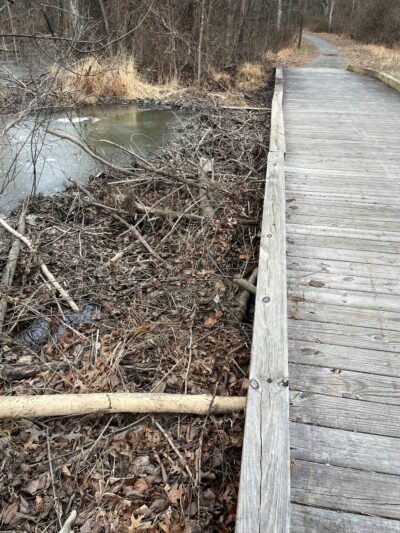
There’s a great opportunity to witness beaver activity right here at Willowsford in The Greens. From the walking path that runs parallel along Grassland Grove from Tulip Poplar Pond to North Star Blvd, you’ll find a large beaver dam immediately beside the wooden trail bridge over a Bull Run tributary. The dam has created several expansive beaver ponds and has flooded a section of the trail, so please be careful if you’re exploring this area on foot.
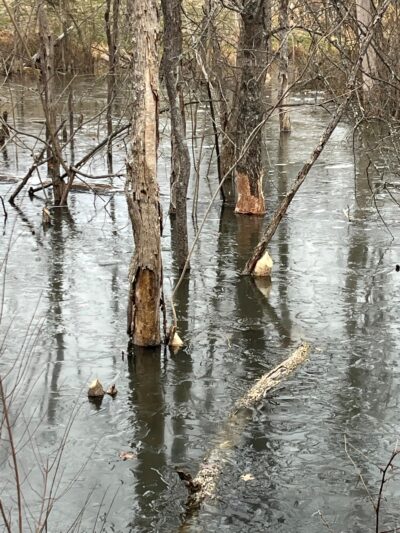
With patience and a quiet approach, you might even see a beaver swimming or working. Seeing the beaver’s handiwork up close, from gnawed tree stumps to engineered watercourses, gives us a deeper appreciation for how this species interacts with its environment. Let us know if you spot their lodge – beavers make two kinds (conical lodges and bank lodges, learn more here). If you want to take a longer hike and see another beaver dam, enter the Bull Run Trail at Poplar Pond and hike to approximately Mile Post 4.5, just south of the Rock Garden. Here you have another opportunity to see a beaver dam and an entire area they have transformed into a wetlands habitat they now call home.
What Are We Doing And What Can Be Done?
Beaver activity can create both incredible wildlife habitat and challenges for trail users (and us taking care of those trails!). Conservancy staff are evaluating non-lethal strategies to manage beaver impacts especially in this location since the trail is flooding. We need to assess mitigation tactics, water diversion tactics, as well as both short-term and long-term trail improvements that could reduce flooding while preserving this valuable wildlife presence.
This dam was present in the spring/summer of 2025 and has been breached several times, only to be rebuilt. This persistence highlights both the beaver’s engineering skill and the ongoing need to balance access, safety, and ecological function along our trails.
Beavers and Virginia Law
In Virginia, relocating beavers is prohibited under state wildlife regulations. Live-trapped beavers may not be moved and released elsewhere. If beavers are causing serious damage and management action is required, property owners must follow the regulations and humane practices outlined by the Virginia Department of Wildlife Resources.