
Spooky Fungi & Forest Oddities
Fall brings crunchy leaves, cool nights, and some of nature’s spookiest sightings, fungi that look straight out of a Halloween story. These strange, colorful decomposers are not just spooky; they play a vital role in forest health.
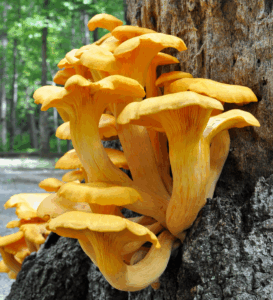
Eastern Jack-o’-Lantern Mushroom (Omphalotus illudens)
This bright orange mushroom often glows faintly in the dark, resembling tiny pumpkins scattered across the forest floor. Found in clusters on decaying hardwood stumps or buried roots, it thrives in shady forests during late summer and fall. While its bioluminescence is enchanting, it’s poisonous and should not be consumed.
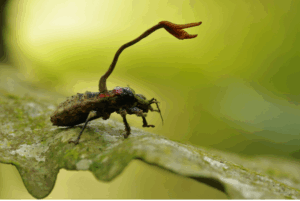
Zombie Fungus (Ophiocordyceps species)
Some Ophiocordyceps species infect insects and arthropods, eventually sprouting stalk-like structures from their hosts’ bodies, real-life zombie behavior. For example, O. sphecocephala infects wasps in North America. These fungi help regulate insect populations and recycle nutrients.
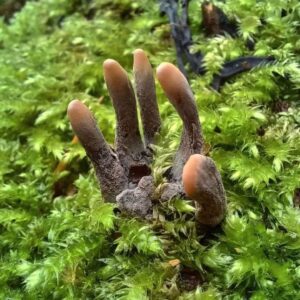
Dead Man’s Fingers (Xylaria polymorpha)
Dark, finger-like clusters emerge from decaying logs, giving this fungus its ghoulish name. Found on old stumps and fallen hardwoods, it decomposes wood and returns nutrients to the soil. A forest floor straight out of a horror movie.
Bleeding Tooth Fungus (Hydnellum peckii)
White with bright red “bleeding” droplets, this fungus looks like something from a vampire’s dessert plate. Found under pine or mixed forests, it forms symbiotic relationships with tree roots and helps maintain healthy soils. Too bitter to eat, but its bright red droplets make it one of the creepiest sights in the forest.

Spooky Spotting Tip: Check shady, damp forests and fallen logs; you might catch a glimpse of one of these eerie decomposers hiding among the leaves. Have a safe and happy Halloween!